In today’s fast-paced business world, rapid change and constant innovation are the new normal. For organisations aiming to thrive, quality training stands as the foundation of sustainable achievement.
This essential guide provides you with the insights and strategies needed to harness quality training for remarkable growth, both professionally and organisationally, in 2026.
You will discover how the landscape of quality training is evolving, which core competencies will drive future success, and which proven strategies and technologies will help you implement effective programmes. We will also show you how to measure results and ensure your training delivers lasting impact.
Are you ready to future-proof your career and organisation? Start with actionable steps outlined here for lasting success in 2026.
The Evolving Landscape of Quality Training in 2026
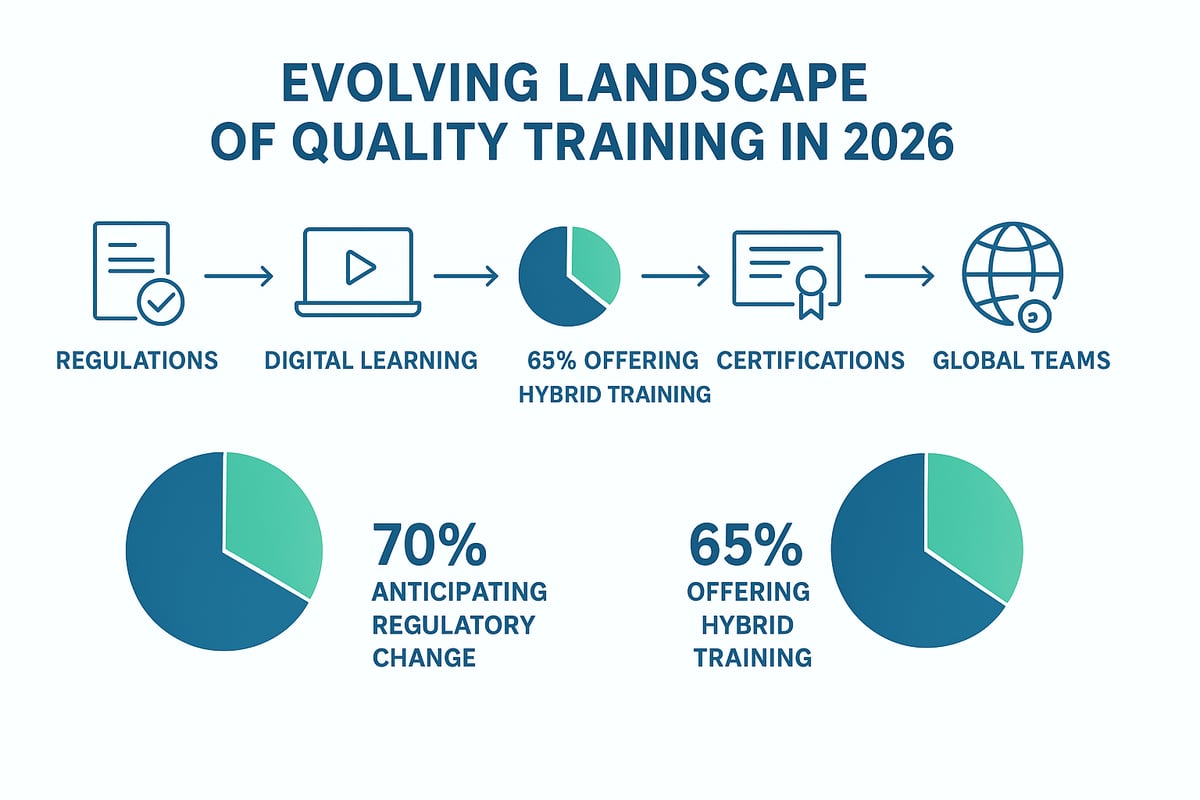
Navigating 2026, organisations face a rapidly transforming landscape for quality training. Regulatory updates, digital innovation, and shifting workforce expectations are reshaping how businesses approach skill development. To stay ahead, leaders must understand these evolving trends and tailor their quality training strategies for maximum impact.
Shifting Industry Standards and Regulations
Regulations in the UK and EU are evolving quickly, with a strong focus on digital trust, sustainability, and risk management. Sectors like construction, healthcare, and manufacturing are experiencing heightened compliance demands, requiring organisations to adapt their quality training programmes. For example, the British Standards Institution (BSI) is emphasising digital trust and environmental responsibility in its latest frameworks.
Staying current with these changes is essential. Over 70% of UK businesses expect regulatory updates after 2025, underlining the urgency for robust quality training. The upcoming ISO 9001:2026 Revision Overview provides detailed guidance on what organisations need to prepare for, ensuring that training aligns with new standards and supports long-term compliance objectives.
The Rise of Sector-Specific Training
Demand for sector-focused quality training is on the rise. Industries such as supply chain, risk management, and process improvement now require tailored learning solutions that address unique challenges. The Chartered Quality Institute (CQI) and International Register of Certificated Auditors (IRCA) have introduced sector filters, making it easier for professionals to find relevant courses in construction, supply chain, and more.
Customisation is becoming a key differentiator for organisational success. By offering bespoke quality training, companies can boost employee engagement and retention, ensuring their teams are equipped with the precise skills needed for their industry. This targeted approach supports both individual growth and wider business objectives.
Digital Transformation and Hybrid Learning Models
The quality training landscape is being transformed by digital technologies. Organisations are increasingly adopting eLearning, live webinars, and blended courses to reach diverse and dispersed workforces. For instance, Lean Six Sigma webinars and masterclasses offered by leading providers enable participants to learn flexibly, regardless of location.
Hybrid models are now mainstream, with 65% of UK training providers offering both online and in-person options. This shift enhances accessibility and allows employees to balance learning with work commitments. Quality training delivered through digital channels supports continuous development and adapts to the evolving needs of modern teams.
Accreditation and Certification Trends
Accredited certifications are more important than ever for both career progression and organisational credibility. Recognised qualifications from bodies such as CQI, IRCA, and ISO are now a standard expectation in many quality-focused roles. New certificate pathways have emerged, giving practitioners and professionals the opportunity to specialise and demonstrate expertise.
Recruiters are placing a premium on certified candidates, with 60% prioritising those with recognised qualifications in quality training. Achieving accreditation not only validates individual competence but also signals a company’s commitment to high standards. This emphasis on certification drives both professional growth and organisational trust.
Emerging Topics and Soft Skills
Quality training in 2026 goes beyond technical knowledge. Leadership, change management, and communication skills are now integral components of modern programmes. Courses on stakeholder communications and business process excellence are increasingly popular, helping professionals navigate complex project environments.
Adaptability, critical thinking, and collaboration are vital for future leaders. These soft skills distinguish quality professionals in a competitive marketplace. By integrating them into quality training, organisations prepare their teams for both current and emerging challenges, fostering resilience and innovation.
Globalisation and Remote Workforce Challenges
The global nature of business brings new challenges to quality training. Organisations must address cross-border compliance and multicultural learning needs, particularly as remote and distributed teams become more common. Managing quality standards across different locations requires a coordinated approach.
CQI’s global course directory and network of training partners support organisations in meeting these demands. Effective quality training ensures teams, wherever they are, uphold consistent standards and contribute to a unified organisational culture.
Core Competencies for Quality Training Success
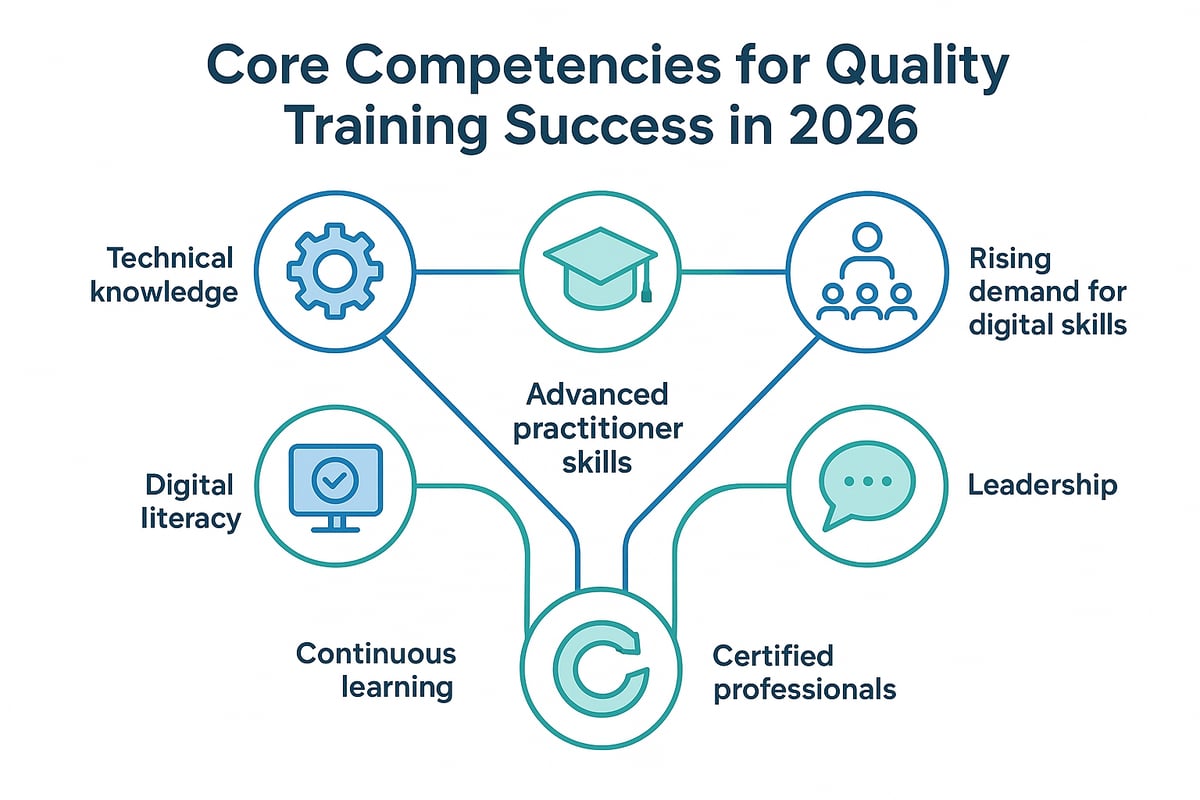
Building a robust foundation in quality training requires a strategic blend of technical expertise, leadership ability, and adaptability. As we approach 2026, these core competencies will shape organisational success and individual career growth. Let us explore the essential skills every professional should master for effective quality training.
Foundational Knowledge and Technical Skills
A solid grasp of quality management systems is the backbone of quality training. Professionals must understand core standards such as ISO 9001, as well as process improvement and risk management basics.
Entry-level courses focus on the principles of QMS, documentation, and compliance. These foundations ensure consistency, regulatory alignment, and a shared language across teams.
For those new to quality training, investing in accredited learning pathways provides the technical base needed for career development and ongoing organisational improvement.
Advanced Practitioner and Professional Skills
As roles evolve, advanced skills become vital for effective quality training. Practitioners must master quality planning, performance measurement, and assurance techniques.
Courses at this level often cover root cause analysis, advanced auditing, and process optimisation. According to industry data, 45% of organisations now seek advanced skills for leadership and specialist roles.
Developing these competencies enables professionals to drive change, identify improvements, and deliver measurable results within their organisations.
Leadership and Change Management
Strong leadership and the ability to manage change are critical for quality training success. Leaders guide strategic improvement programmes, facilitate teams, and foster a culture of continuous advancement.
Training in strategic change and business process excellence prepares individuals to navigate complex projects and industry transitions. For those seeking to strengthen these abilities, Leadership and management training options offer targeted development opportunities.
Mastering these competencies empowers professionals to inspire others and ensure quality initiatives achieve lasting impact.
Communication and Stakeholder Engagement
Quality training is incomplete without effective communication. Professionals must influence, negotiate, and manage diverse stakeholder groups.
Courses in stakeholder communications help individuals present ideas clearly, resolve conflicts, and align teams around shared objectives. These skills directly affect project success and organisational cohesion.
Building confidence in communication enhances every stage of the quality training process, from presenting findings to driving adoption of new practices.
Digital Competencies and Data Literacy
The digital era demands new capabilities within quality training. Professionals need to use digital tools, analytics platforms, and hybrid learning technologies to remain competitive.
For example, data literacy enables teams to interpret performance metrics, predict trends, and make informed decisions. By 2026, 58% of quality professionals are expected to require upskilling in digital tools.
Continuous investment in digital competencies positions organisations to adapt quickly and leverage the full benefits of modern quality training.
Continuous Learning and Professional Development
Quality training is not a one-time event but an ongoing journey. Professionals must embrace continuous learning, access career hubs, and participate in mentoring programmes to stay ahead.
Engagement with professional networks and ongoing education ensures skills remain current and relevant. This commitment to development is key for future-proofing both careers and organisations.
By prioritising these core competencies, individuals and businesses can unlock the full potential of quality training and achieve sustained success in 2026.
Step-by-Step Strategies for Implementing Quality Training in 2026
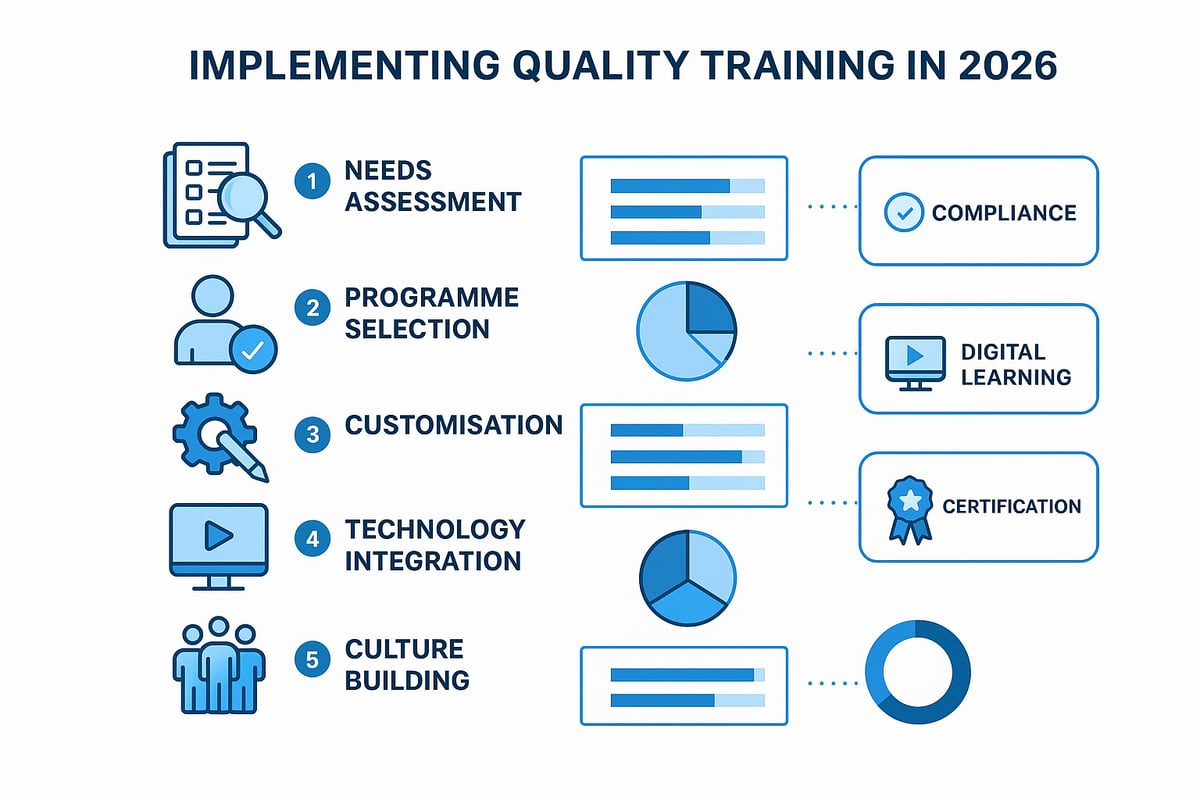
Investing in quality training requires a strategic, structured approach. To maximise impact and ensure your organisation is future-ready, follow these actionable steps. Each stage is designed to align your training initiatives with business goals and evolving industry standards.
Assessing Organisational Needs and Setting Objectives
Begin by analysing your organisation’s current capabilities and future requirements. Conduct a comprehensive skills gap analysis to identify where quality training can drive the most value. Engage with stakeholders to align your training objectives with broader business strategies and regulatory expectations.
Set clear, measurable outcomes for all quality training initiatives. Use tools like employee surveys, performance reviews, and benchmarking to gather data. This foundational step ensures that your training investments address real organisational needs and set the stage for measurable success.
Selecting the Right Training Programmes and Providers
Choosing the appropriate quality training programmes is crucial for effective skills development. Evaluate accredited courses that meet both industry and regulatory standards. Consider sector-specific options that target the unique challenges of your field.
Look for providers who offer flexible delivery methods and have a proven track record in your industry. Use course filters by topic, competence, and level to match learning paths to employee roles. This approach ensures that every participant receives relevant, impactful training.
Designing Customised and Flexible Training Pathways
To cater to a diverse workforce, develop training pathways that blend eLearning, in-person sessions, and on-the-job experiences. Flexible solutions accommodate different learning styles and geographic locations, making quality training accessible to all.
Many organisations benefit from bespoke training solutions for organisations that are tailored to their specific business processes and culture. Customisation not only increases engagement but also drives better knowledge retention and application of quality standards.
Integrating Technology and Digital Platforms
Leverage modern digital platforms to enhance the delivery and tracking of quality training. Implement learning management systems (LMS), webinars, and interactive content to improve accessibility for remote and hybrid teams.
Use digital assessment tools and analytics to monitor progress in real time. Incorporating technology ensures that quality training remains scalable, adaptive, and engaging, supporting continuous development across the organisation.
Fostering a Culture of Quality and Continuous Improvement
Quality training is most effective when it is part of a broader culture of excellence. Encourage leadership to champion ongoing learning and recognise staff achievements through certification and progression opportunities.
Build communities of practice where employees can share insights and best practices. This collaborative environment supports continuous improvement, making quality training a core value rather than a one-off initiative.
Monitoring, Evaluation, and Feedback Loops
Establish robust systems to measure the effectiveness of quality training. Use key performance indicators (KPIs), participant feedback, and business performance data to evaluate impact.
Regular review cycles and benchmarking against industry standards allow you to fine-tune your approach. By embracing iterative improvements, organisations can ensure that their quality training remains relevant and delivers ongoing value.
The Role of Technology in Quality Training
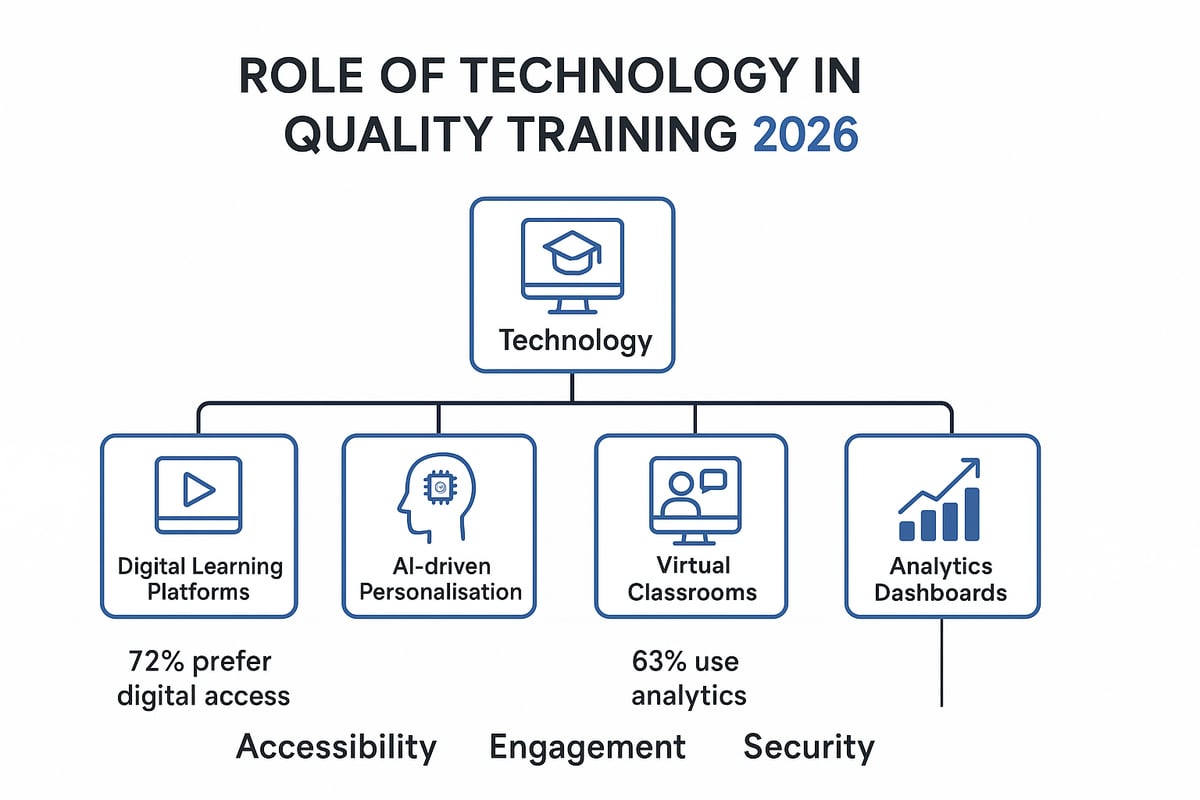
Technology is transforming the world of quality training at an unprecedented pace. Digital tools and platforms are reshaping how professionals access, engage with, and benefit from quality training. As organisations strive for excellence and compliance in 2026, technology is no longer optional but a fundamental enabler of effective quality training.
Digital Learning Platforms and Accessibility
Digital learning platforms are now at the heart of quality training. Online portals, mobile apps, and self-paced modules give professionals unprecedented flexibility to learn anytime, anywhere. The demand for accessible quality training is reflected in recent data, with 72% of UK professionals preferring digital access to training resources.
Features like interactive dashboards, personalised progress tracking, and on-demand support help learners stay motivated and on track. Blended learning, which merges online and in-person elements, is increasingly popular for its adaptability to diverse workforces. For a comprehensive view of upcoming digital trends, consider reviewing the Top eLearning Trends for 2026, which highlights innovations shaping the future of quality training.
AI, Automation, and Personalisation
Artificial intelligence is revolutionising quality training by making learning journeys more adaptive and efficient. AI-driven platforms can analyse user behaviour, recommend tailored content, and automate assessments. This ensures that each professional receives the right training at the right time.
Automation streamlines administrative tasks such as enrolments, reminders, and certification tracking. Predictive analytics can identify individual or organisational skill gaps, allowing for proactive intervention. As a result, quality training becomes more targeted and effective, supporting both professional development and organisational objectives.
Virtual Classrooms and Interactive Tools
Virtual classrooms are now a staple of modern quality training, enabling real-time engagement regardless of location. These platforms offer live instruction, breakout rooms, and instant feedback, replicating the benefits of face-to-face learning in a digital environment.
Interactive tools such as simulations, polls, and gamification elements enhance experiential learning and retention. Masterclasses and workshops that integrate these technologies deliver richer, more memorable training experiences. Ultimately, virtual classrooms make quality training accessible to global teams while maintaining high levels of interactivity.
Data-Driven Decision Making and Analytics
The integration of analytics into quality training is transforming how organisations measure success and optimise learning strategies. Training managers now rely on dashboards that track attendance, assessment scores, and progress toward certification.
Data-driven insights enable continuous improvement by identifying what works and what needs refinement. Notably, 63% of training managers use analytics to optimise their quality training programmes. By linking learning outcomes to key performance indicators, organisations can clearly demonstrate the value and impact of quality training investments.
Cybersecurity and Digital Trust in Training
As digital learning becomes mainstream, cybersecurity is a critical concern for quality training. Organisations must ensure that personal data, assessment results, and intellectual property remain secure throughout the training process.
Robust digital trust frameworks address privacy, data protection, and the integrity of online assessments. Compliance with regulations and best practices is essential for maintaining confidence in digital quality training platforms. By prioritising security, organisations safeguard both their learners and their reputations in a rapidly evolving digital landscape.
Measuring the Impact and ROI of Quality Training
Understanding the true value of quality training demands a structured approach to measurement. Organisations require clear metrics, robust data collection, and actionable insights to justify investment and drive continuous improvement. This section explores how to define, collect, and analyse the right data, demonstrate business value, refine strategies, and overcome common challenges in measuring quality training ROI.
Defining Success Metrics and KPIs
The foundation for evaluating quality training lies in establishing clear, relevant metrics. Success indicators should directly link to business objectives, such as improved performance, regulatory compliance, staff retention, and learner satisfaction. For example, courses focused on enterprise performance measurement help organisations identify KPIs that matter for their sector.
Common KPIs include completion rates, post-training assessment scores, and audit results. These metrics create a baseline for comparison over time. Referencing the ISO 9001:2026 Revision Update can ensure your metrics align with current and emerging standards, keeping your quality training strategy future-ready.
Collecting and Analysing Training Data
Gathering accurate data is essential for assessing the effectiveness of quality training. Methods include participant surveys, knowledge assessments, performance reviews, and benchmarking against industry standards. Multi-source feedback, integrating input from trainees, managers, and stakeholders, provides a holistic view of training outcomes.
Data analysis uncovers trends, highlights strengths, and identifies areas for improvement. Organisations that systematically collect and review training data are better positioned to make evidence-based decisions and adjust their quality training programmes for maximum impact.
Demonstrating Business Value and Compliance
To justify continued investment in quality training, organisations must demonstrate tangible business outcomes. Linking training to improved quality metrics, such as higher audit scores or reduced error rates, provides compelling evidence of value. For instance, businesses that invest in accredited courses often experience enhanced compliance and operational efficiency.
Clear links between quality training and compliance are particularly crucial in regulated industries. Certification achievements, such as those gained through accredited online quality courses, serve as proof points for both internal stakeholders and external auditors, underpinning organisational credibility.
Continuous Improvement Based on Evaluation
Evaluating the impact of quality training is not a one-off task. Regular review cycles, informed by performance data and participant feedback, enable organisations to refine course content and delivery methods. This iterative approach ensures that training remains aligned with evolving business needs and regulatory requirements.
Continuous improvement is supported by benchmarking results, updating learning pathways, and integrating new topics as standards shift. By fostering a culture of ongoing evaluation, organisations maximise the long-term benefits of their quality training investments.
Overcoming Common Challenges in Impact Measurement
Measuring the true ROI of quality training often presents challenges. Attribution can be complex, as improved outcomes may result from multiple factors. Engagement levels and data quality may also vary across teams and departments.
To address these issues, organisations should use a combination of quantitative and qualitative metrics, maintain consistent data collection practices, and share best practices across the business. Learning from others’ experiences and staying informed about industry standards helps ensure that quality training remains both measurable and meaningful.
Future Trends and Opportunities in Quality Training
As 2026 approaches, organisations and professionals must stay ahead of the curve by embracing new trends in quality training. The landscape is evolving rapidly, shaped by regulatory shifts, technological innovation, and changing workforce expectations. Anticipating these changes is essential for sustaining excellence and maintaining a competitive edge. Let us explore the future of quality training and the opportunities it presents.
Anticipating Regulatory and Industry Changes
The regulatory environment for quality training is entering a new era of complexity. With updated requirements and standards, such as the anticipated ISO 9001:2026 revision, businesses must be vigilant. UK and EU frameworks continue to evolve, prompting organisations to reassess compliance strategies. Sectors like manufacturing, healthcare, and construction are seeing stricter audit and documentation demands.
Staying current with new regulations ensures that quality training programmes remain effective and relevant. Proactively monitoring changes, including reviewing the ISO 9001:2026 Revision Timeline, allows organisations to plan and implement necessary updates in advance. Forward-thinking businesses are embedding regulatory readiness into their culture, ensuring they are never caught off guard.
Customisation and Personalised Learning Journeys
Customisation is becoming a cornerstone of quality training. No longer is a one-size-fits-all approach sufficient. Organisations are now tailoring learning experiences to match specific roles, industries, and individual learner needs. The use of artificial intelligence and data analytics enables content personalisation, adapting modules and pacing for optimal impact.
Personalised learning journeys boost engagement and retention. Employees value training that recognises their unique career paths and aspirations. By leveraging adaptive learning platforms, companies can provide quality training that empowers staff at every level to progress confidently.
Integration of Sustainability and ESG in Training
Sustainability and ESG (environmental, social, governance) considerations are now integral to quality training. With increasing regulatory pressure and stakeholder expectations, businesses are embedding climate action, social responsibility, and governance principles into their curricula. Training on topics such as sustainable supply chains, ethical leadership, and environmental risk management is in high demand.
BSI and other leading organisations have introduced programmes focused on climate frameworks and sustainability best practices. According to recent data, over half of all quality training now includes ESG components. Embracing these themes not only ensures compliance but also strengthens corporate reputation and fosters long-term resilience.
Expansion of Micro-Credentials and Modular Learning
The rise of micro-credentials is transforming how professionals engage with quality training. Short courses, digital badges, and stackable certificates offer flexible pathways for upskilling and career progression. Modular learning allows individuals to focus on specific competencies, building expertise incrementally and efficiently.
Employers increasingly recognise micro-credentials as valid proof of skills and commitment. This approach benefits organisations by enabling rapid response to skills gaps and business changes. Practitioners and professionals alike are using modular programmes to demonstrate their readiness for evolving industry demands.
Global Collaboration and Knowledge Sharing
Quality training has become a global enterprise. Organisations are leveraging international networks, communities of practice, and cross-border partnerships to share expertise and benchmark performance. Online platforms facilitate access to global best practices, making it easier to learn from diverse experiences and regulatory contexts.
CQI’s network of global training partners and online forums exemplifies this collaborative spirit. Through knowledge sharing, organisations can accelerate innovation, improve standards, and foster a culture of continuous improvement. Embracing a global mindset is key to thriving in a rapidly changing world of quality training.
The Growing Importance of Soft Skills
While technical expertise remains crucial, soft skills are now a major differentiator in quality training. Employers value abilities such as leadership, communication, adaptability, and collaboration. Courses on change management and stakeholder engagement are increasingly popular, reflecting the need for well-rounded professionals.
Investing in dedicated soft skills development courses helps individuals excel in quality-focused roles. Data shows that nearly seven in ten employers prioritise these attributes alongside technical qualifications. By developing soft skills, professionals position themselves for long-term success and advancement.
Preparing for the Workforce of the Future
The future workforce will be shaped by automation, digitalisation, and hybrid work environments. Quality training must evolve to address these realities, equipping employees with digital competencies and fostering a culture of lifelong learning. Agile professionals who can adapt to new technologies and business models will be in high demand.
Organisations should encourage upskilling, support flexible learning formats, and promote resilience among staff. By prioritising quality training that anticipates future needs, businesses can future-proof both careers and company performance, ensuring sustainable growth in an ever-changing landscape.